Source 304 stainless steel concrete screw for machinery, chemical, and building
Compare 304 stainless steel concrete screw options from verified suppliers. This catalog features 30 listings with varying grades, sizes, and certifications for use in machinery, chemical industry, environmental projects, and building applications.
Key considerations
Products List






Comprehensive Sourcing Guide
Strategic Sourcing Guide for 304 Stainless Steel Concrete Screws
Understanding Product Definitions and Technical Classifications
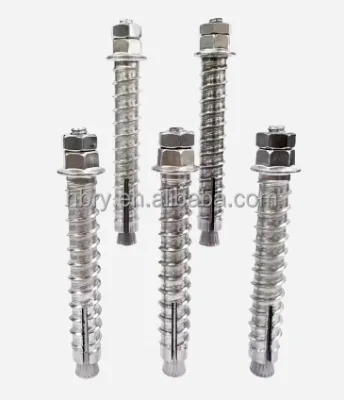
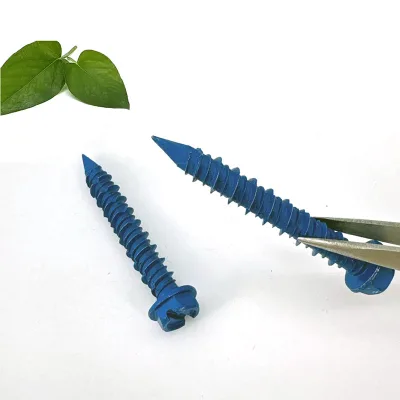
When sourcing 304 stainless steel concrete screws, buyers must first distinguish between the broad category of fasteners and the specific mechanical properties required for concrete applications. The product landscape includes several overlapping classifications such as Concrete Self Tapping Anchor Bolts, Mechanical Anchor Bolts, Concrete Bolts, Construction Anchors, Expansion Bolts, and Screw Anchors. While these terms are often used interchangeably in general catalogs, precise procurement requires identifying the specific mechanism of action. The core keyword implies a screw-type anchor designed for direct insertion into concrete, relying on the thread profile for fixation rather than a separate expansion sleeve.
Material selection is the primary differentiator for this category. The specific requirement for 304 stainless steel indicates a need for corrosion resistance in environments where carbon steel would degrade rapidly. The supplied data confirms that 304 stainless steel is a verified material option, often listed alongside 316 grades for enhanced chemical resistance. The grade of the material is critical; while some listings mention generic "Stainless Steel," the specific 304 designation ensures the correct chromium and nickel content for standard atmospheric and mild chemical exposure. Buyers should verify that the supplier explicitly states "Stainless Steel 304" or "SS304" in the product model or material specification to avoid receiving lower-grade alternatives that may fail in damp or coastal environments.
Head style and thread geometry further define the product's utility. The observed market data includes variations such as Hexagon Head With Flange, Countersunk Head, and Round Head styles. For concrete applications, the head style dictates the tooling required for installation and the final aesthetic of the finished surface. A hexagon head with a flange provides a large bearing surface, distributing load over a wider area of the concrete, which is essential for heavy-duty structural applications. Conversely, countersunk heads are designed to sit flush with the surface, often requiring a specific recess in the concrete or the use of a washer. The thread profile, described in some contexts as having a "Hexagon" groove or specific self-tapping characteristics, must be compatible with the density of the concrete being used.
Compliance, Standards, and Certification Verification
In the fastener industry, compliance with international standards is not merely a formality but a prerequisite for structural safety and legal liability. The supplied product facts indicate a wide range of recognized standards, including DIN, GB, ANSI, BSW, JIS, GOST, ASTM, AISI, NF, and EN. When sourcing 304 stainless steel concrete screws, buyers must verify which specific standard governs the product's dimensions, tensile strength, and material composition. For instance, a product labeled with "DIN" standards adheres to German engineering specifications, while "GB" refers to Chinese National Standards. The presence of multiple standards in a single listing suggests the supplier may offer products compliant with various regional requirements, but the buyer must confirm the specific standard applicable to their project location.
Certification serves as an independent validation of the supplier's quality management systems. The data explicitly mentions ISO9001:2008 and SGS certification as available credentials. ISO9001:2008 indicates that the manufacturer has a documented quality management system in place, ensuring consistency in production processes. SGS certification typically refers to third-party inspection and testing services, providing an additional layer of assurance regarding the product's physical properties. However, buyers should note that while these certifications are listed as available, they are not guaranteed for every SKU. It is imperative to request valid, current certificates for the specific batch of 304 stainless steel screws being ordered. Relying on a general claim of certification without verifying the certificate's scope and validity can lead to significant compliance risks, especially in regulated industries like construction and chemical processing.
The product standard designation also plays a role in determining the mechanical performance. Listings reference standards such as "St2.2-St6.3/3#-12#" and "M6-M20," which likely refer to size ranges or specific grade classifications within a standard system. Buyers must ensure that the selected screw meets the load-bearing requirements of their application. For example, a screw with a "M6" designation refers to a metric thread with a 6mm nominal diameter, while larger sizes like "M20" offer significantly higher shear and tensile strengths. The verification process should include a cross-reference between the supplier's stated standard and the project's engineering specifications to ensure compatibility.
Cost Drivers and Pricing Dynamics
The pricing of 304 stainless steel concrete screws is influenced by a complex interplay of material costs, manufacturing complexity, and order volume. The observed price range in the market spans from $0.01 to $6,000, a vast disparity that reflects the difference between a single unit and a bulk industrial order. The lower end of this spectrum typically represents individual units or very small quantities, where the fixed costs of packaging and logistics are amortized over a minimal number of items. Conversely, the upper end likely represents large-scale palletized orders or specialized custom configurations.
Material cost is the primary driver of the base price. Stainless steel 304 is significantly more expensive than carbon steel due to the inclusion of nickel and chromium. Fluctuations in the global commodity market for these metals can directly impact the unit price of the screws. Additionally, the manufacturing process for stainless steel requires specific tooling and heat treatment to maintain the material's corrosion-resistant properties, adding to the production cost. The "Polishing" finish mentioned in the product attributes also contributes to the cost, as it involves additional labor and machinery time compared to a standard galvanized or plain finish.
Order volume and Minimum Order Quantity (MOQ) are critical factors in determining the final landed cost. The observed MOQ range is extensive, spanning from 1 to 50,000 units. Suppliers often offer tiered pricing structures where the unit cost decreases as the order quantity increases. For buyers requiring large quantities, negotiating based on the ability to meet higher MOQ thresholds can yield substantial savings. However, buyers must balance cost savings against inventory holding costs and storage capabilities. Customization is another cost driver; while "Customization: Available" is a standard offering, requests for non-standard sizes, specific thread lengths, or unique head styles will incur additional tooling and setup fees. The "Customized Size: Acceptable Upon Request" attribute suggests flexibility, but buyers should anticipate that custom orders will have higher unit costs and potentially longer lead times compared to standard stock items.
Typical Applications and Industry Use Cases
The versatility of 304 stainless steel concrete screws makes them suitable for a diverse array of industries, as evidenced by the listed applications: Machinery, Chemical Industry, Environmental, and Building. In the building sector, these fasteners are essential for securing structural elements, facade attachments, and interior fixtures to concrete substrates. The corrosion resistance of 304 stainless steel is particularly valuable in building applications exposed to moisture, such as exterior cladding, swimming pool equipment, or coastal structures. The "Concrete Self Tapping Anchor Bolt" and "Expansion Bolt" types are frequently used for hanging heavy loads where drilling and anchoring are required without the need for chemical adhesives.
In the chemical industry, the material's resistance to corrosion is paramount. Equipment, piping supports, and safety railings often require fasteners that can withstand exposure to harsh chemicals, acids, and alkalis. While 316 stainless steel offers superior resistance to chlorides, 304 remains a cost-effective choice for many chemical environments where exposure is not extreme. The "Environmental" application category likely refers to water treatment facilities, sewage systems, and outdoor infrastructure where exposure to the elements is constant. In these settings, the longevity of the fastener is critical to prevent structural failure and reduce maintenance costs.
The machinery sector utilizes these screws for assembling and securing components that may be subject to vibration or dynamic loads. The "Hexagon Head With Flange" design provides a secure connection that resists loosening, making it ideal for heavy machinery. The ability to customize the product, as noted in the attributes, allows engineers to tailor the fastener to specific machine requirements, such as unique thread pitches or lengths. The "Mechanical Anchor Bolt" and "Screw Anchor" classifications highlight the reliance on mechanical interlock rather than chemical bonding, which is advantageous in applications where drilling into existing concrete is necessary without the risk of adhesive failure.
Supplier Evaluation and Capacity Assessment
Evaluating a supplier for 304 stainless steel concrete screws requires a thorough assessment of their manufacturing capacity, geographic location, and logistical capabilities. The supplied data indicates that suppliers are located in regions such as Guangdong, China, and Taizhou City, Jiangsu Province. These regions are known for their robust manufacturing ecosystems and expertise in metalworking. However, the specific location can impact shipping costs and lead times. Buyers should verify the "Nearest Port," which is listed as Shanghai, to estimate freight costs and transit times to their destination.
Production capacity is a critical metric for ensuring supply chain reliability. One of the high-confidence facts notes a capacity of "300tons/Month," which provides a benchmark for the scale of operations. For large-scale projects, buyers must ensure that the supplier can meet their volume requirements without compromising quality or delivery schedules. The "Delivery Date" is specified as "30days After The Order Is Confirmed," which serves as a standard lead time expectation. However, this timeline can vary based on order complexity, customization requirements, and current production load. Buyers should confirm the lead time in writing and understand the factors that could extend it, such as material shortages or custom tooling requirements.
Logistics and transportation methods are also essential considerations. The "Means of Transportation" are listed as "by Sea or by Air," offering flexibility based on urgency and budget. Sea freight is generally more cost-effective for large, heavy orders, while air freight is suitable for urgent, smaller shipments. The packaging methods, including "White Box&Carton& Pallet" and "Small Box Packing, Bulk Packing," indicate that the supplier offers various packaging options to protect the product during transit. Buyers should specify their preferred packaging to prevent damage and facilitate easy handling upon arrival. Additionally, the "QC System: 100% Inspection Before Shipment" is a strong indicator of the supplier's commitment to quality, ensuring that every unit meets the specified standards before leaving the factory.
Quality Control and Long-Term Procurement Considerations
Maintaining consistent quality in 304 stainless steel concrete screws is vital for the safety and durability of the final structure. The "100% Inspection Before Shipment" protocol mentioned in the data suggests a rigorous quality control process. Buyers should verify the specific parameters of this inspection, including checks for dimensional accuracy, surface finish, and material composition. The "Polishing" finish, while aesthetically pleasing, must be uniform and free of defects that could compromise the corrosion resistance of the stainless steel. Regular audits of the supplier's quality management system, particularly their adherence to ISO9001:2008, can provide assurance that their processes remain consistent over time.
Long-term procurement considerations involve building a sustainable relationship with a reliable supplier. The ability to handle "Customized Size: Acceptable Upon Request" is a significant advantage for buyers with unique project requirements. However, customization introduces variability, and buyers must establish clear specifications and communication channels to ensure that custom orders meet expectations. The "Standard: As Your Requirements" attribute highlights the supplier's flexibility, but it also places the onus on the buyer to provide precise technical drawings and specifications.
Sustainability and supply chain resilience are increasingly important in procurement strategies. Buyers should assess the supplier's ability to source raw materials consistently and their contingency plans for potential disruptions. The "Capacity: 300tons/Month" figure provides a baseline, but buyers should inquire about the supplier's ability to scale production during peak demand periods. Additionally, the "Means of Transportation" options allow for strategic planning of logistics, balancing cost and speed. By focusing on suppliers with robust quality control, verified certifications, and flexible production capabilities, buyers can secure a reliable supply of 304 stainless steel concrete screws that meet the demanding requirements of modern construction and industrial applications.
FAQs
What standards do 304 stainless steel concrete screws meet?
These screws comply with multiple international standards including DIN, GB, ANSI, BSW, JIS, GOST, ASTM, and EN. Buyers must verify the specific standard required for their project location, as listings may offer various compliant options rather than a single universal standard.
Can I request custom sizes for these anchor bolts?
Yes, customization is available and custom sizes are acceptable upon request. However, non-standard dimensions may incur additional tooling fees and could extend the standard 30-day delivery timeline compared to stock items.
What is the minimum order quantity for these fasteners?
The minimum order quantity ranges from 1 to 50,000 units depending on the specific supplier and product configuration. Buyers should negotiate based on volume, as larger orders often qualify for tiered pricing structures.
Which certifications are available for these stainless steel products?
Available certifications include ISO9001:2008 and SGS for quality management and third-party inspection. Buyers should request valid certificates for the specific batch to ensure compliance, as these are not guaranteed for every SKU.
Where are these concrete screws manufactured and shipped from?
Products originate from manufacturing hubs in Guangdong and Taizhou City, Jiangsu Province, China. The nearest shipping port is Shanghai, which influences freight costs and transit times for international buyers.
What is the typical delivery time for confirmed orders?
The standard delivery date is 30 days after the order is confirmed. This timeline may vary based on order complexity, customization requirements, and current production load at the factory.